

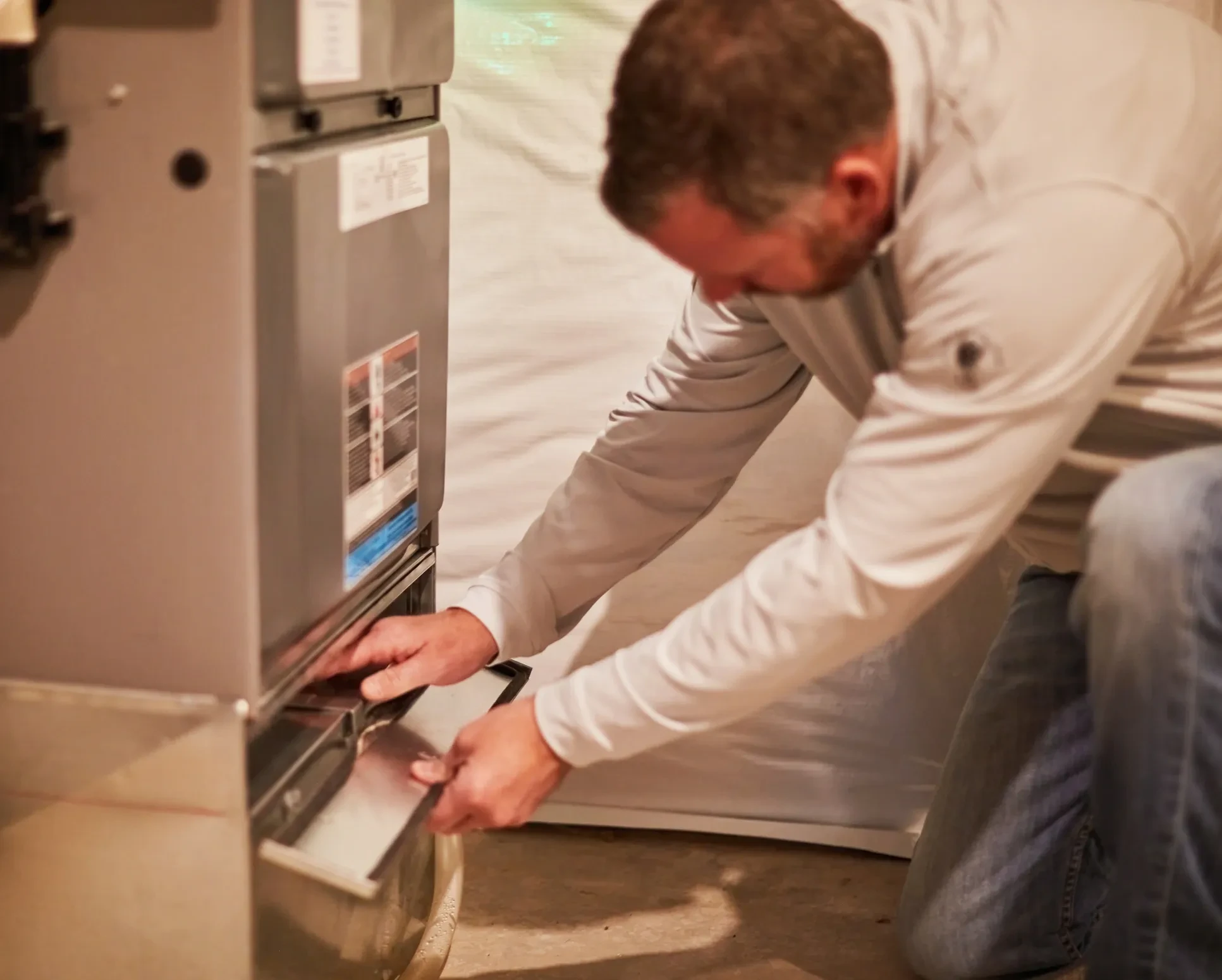

Variable-Speed Refers to the Blower Motor
When a furnace is described as "variable-speed," it means the blower motor — the fan that moves air through your ductwork — can operate at many different speeds rather than just high and low (or just high). This is different from the burner staging (single-stage, two-stage, modulating), though the two are often paired together in premium furnaces.
The motor technology behind variable-speed furnaces is called ECM — Electronically Commutated Motor. It's a brushless DC motor controlled by a microprocessor that adjusts speed in small increments based on what the system needs.
How ECM Motors Work
A standard PSC (Permanent Split Capacitor) blower motor runs at fixed speeds — typically one or two settings. It draws the same amount of electricity whether it's moving a little air or a lot. It's simple and inexpensive, but inefficient.
An ECM motor uses a permanent magnet rotor and electronic controls to vary speed continuously. It draws significantly less electricity at lower speeds — the relationship between speed and power consumption is roughly cubic, meaning running at 50% speed uses only about 12% of the power of running at full speed. This is why ECM motors can cut blower electricity use by 50–75% compared to PSC motors.
The Comfort Benefits
No cold blast at startup: A variable-speed blower ramps up slowly from a low speed, so you don't feel a rush of cool air when the furnace first starts. It reaches full speed gradually as the heat exchanger warms up.
Continuous low-speed circulation: Many variable-speed furnaces run the blower at a very low speed continuously between heating cycles. This keeps air circulating through your filter, reduces temperature stratification (hot air near the ceiling, cool air near the floor), and improves overall air quality.
Quieter operation: Lower speeds mean less noise. A variable-speed furnace running at 40% capacity is noticeably quieter than a single-speed furnace running at 100%.
Better humidity control: Longer, lower-speed run cycles are more effective at removing humidity in summer (when paired with an AC) and distributing humidified air in winter.
The Efficiency Benefits
The blower motor is the second-largest electricity consumer in your HVAC system (after the AC compressor). A standard PSC motor draws 400–700 watts. An ECM motor doing the same job draws 100–200 watts. Over a heating season in Chicago, where the blower runs thousands of hours, that difference adds up to $50 to $150/year in electricity savings.
Variable-speed blowers also allow the furnace to maintain more consistent airflow regardless of filter condition or duct restrictions — the motor compensates by adjusting speed. This protects the heat exchanger from overheating and extends equipment life.
Variable-Speed vs. Multi-Speed
Multi-speed (PSC): Two or three fixed speed settings. Better than single-speed, but still jumps between settings rather than ramping smoothly. Less efficient than ECM.
Variable-speed (ECM): Continuous adjustment across a wide range. Smoother operation, quieter, more efficient. The right choice for most new installations.
Modulating Burner + Variable-Speed Blower
The best combination for comfort is a modulating burner (adjusts heat output continuously) paired with a variable-speed ECM blower. The two work together to maintain almost perfectly consistent temperature — the burner produces exactly as much heat as needed, and the blower moves exactly as much air as needed. This is what you get with furnaces like the Lennox SLP99V or Carrier Infinity 98.
A two-stage burner with a variable-speed blower (like the Lennox EL296V or Goodman GMVC96) is a step down in comfort but still significantly better than a single-stage furnace with a PSC motor — and costs less than a full modulating system.
Is It Worth the Upgrade?
For most Chicago homeowners replacing a furnace: yes. The price premium for a variable-speed ECM blower over a multi-speed PSC motor is typically $300 to $600 at the furnace level. The electricity savings alone often pay that back in 3–5 years, and the comfort improvement is immediate and noticeable.
If you're also running a whole-home humidifier or air purifier, a variable-speed blower makes those accessories significantly more effective — continuous low-speed circulation means the air is constantly being conditioned, not just during heating cycles.
ComEd Rebates for ECM Motors
ComEd offers rebates for qualifying HVAC equipment with ECM blower motors in Illinois. The rebate amount varies by program year. Ask your contractor to confirm current eligibility when getting a quote — it can offset a meaningful portion of the upgrade cost.