


When to Do It
The best time for AC maintenance in Chicago is late April or early May — after the last freeze risk has passed but before the first hot stretch of the season. Scheduling early means you're not competing with everyone else who waited until their AC stopped working in July.
What You Can Do Yourself
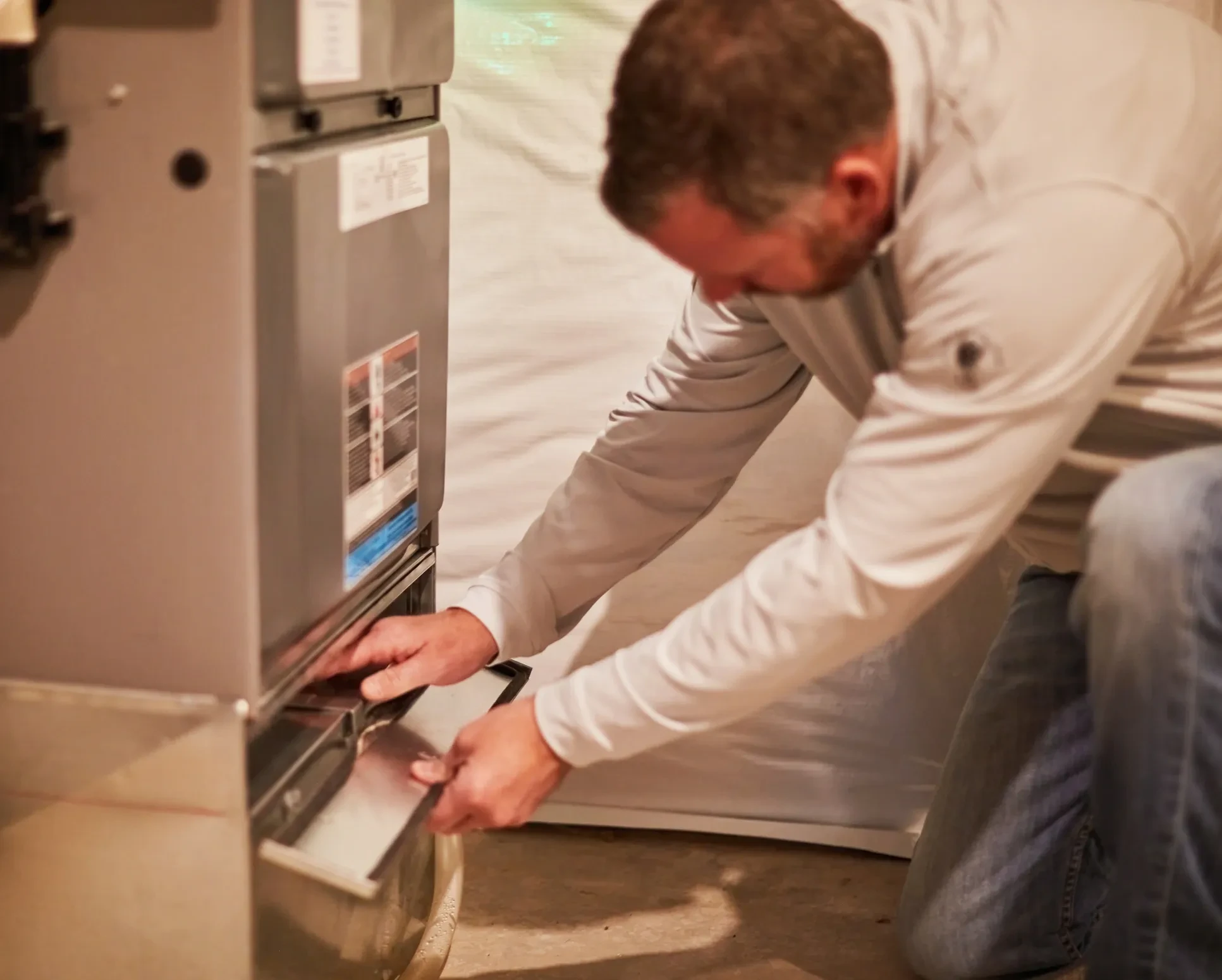
Replace the air filter. This is the single most impactful thing a homeowner can do for their HVAC system. A clogged filter restricts airflow, reduces efficiency, and can cause the evaporator coil to freeze. Replace 1-inch filters every 30–60 days during the cooling season. 4-inch media filters typically last 6–12 months.
Clear the area around the outdoor unit. Remove any leaves, debris, or vegetation that has accumulated around the condenser. The unit needs at least 2 feet of clearance on all sides for adequate airflow. Trim back any shrubs or plants that have grown too close over the winter.
Straighten bent condenser fins. The aluminum fins on the outdoor unit can get bent by debris or hail. Bent fins restrict airflow and reduce efficiency. A fin comb (available at hardware stores for a few dollars) can straighten them. Be gentle — the fins are delicate.
Check and clear the condensate drain line. Locate the drain line outlet (usually a white PVC pipe near the outdoor unit or in a utility area). Pour a cup of diluted bleach or white vinegar into the drain access port (usually a T-shaped fitting near the air handler) to prevent algae buildup. If the drain is already clogged, a wet/dry shop vac at the outlet can often clear it.
Test the system before you need it. Turn the AC on in late April and run it for 15–20 minutes. Make sure cool air is coming from the vents, the outdoor unit is running, and there are no unusual noises. Catching a problem in April is much better than discovering it on the first 90°F day in June.
Check thermostat batteries. If your thermostat uses batteries, replace them annually. A failing thermostat battery can cause erratic behavior or prevent the system from starting.
What Requires a Licensed Technician
Refrigerant check and recharge. Refrigerant handling requires EPA 608 certification. A technician will check the refrigerant charge and inspect for leaks. Low refrigerant always indicates a leak — it doesn't get consumed.
Evaporator coil cleaning. The indoor coil accumulates dust and debris over time. A dirty coil reduces heat transfer and can cause freezing. Professional cleaning uses coil cleaner and proper drainage — not something to attempt without the right tools and training.
Condenser coil cleaning. The outdoor coil can be rinsed with a garden hose (from the inside out, not outside in), but a thorough professional cleaning with coil cleaner is more effective and should be done every 2–3 years.
Electrical component inspection. A technician will check capacitors, contactors, and wiring for wear. Capacitors degrade over time and often fail on the hottest days of the year — when you need your AC most. Replacing a weak capacitor proactively is far less disruptive than an emergency call in July.
Blower motor and belt inspection. The technician will check blower motor amperage, lubricate bearings if applicable, and inspect the belt on older systems.
System performance verification. A technician will measure supply and return air temperatures, check static pressure, and verify the system is operating within manufacturer specifications.
End-of-Season Checklist (Fall)
Cover the outdoor unit. A breathable cover (not a plastic tarp) protects the condenser from falling debris over the winter. Don't seal it completely — moisture needs to escape.
Replace the filter. Start the heating season with a fresh filter.
Clear the area around the outdoor unit. Remove any leaves or debris before they decompose and attract pests.
Schedule Your Annual Tune-Up
D's Air & Heating, Inc. performs comprehensive AC tune-ups throughout Chicago and the surrounding suburbs. A tune-up includes all of the professional maintenance items above, plus a full system inspection and written report. Call (773) 940-0965 to schedule — early spring slots fill quickly.