

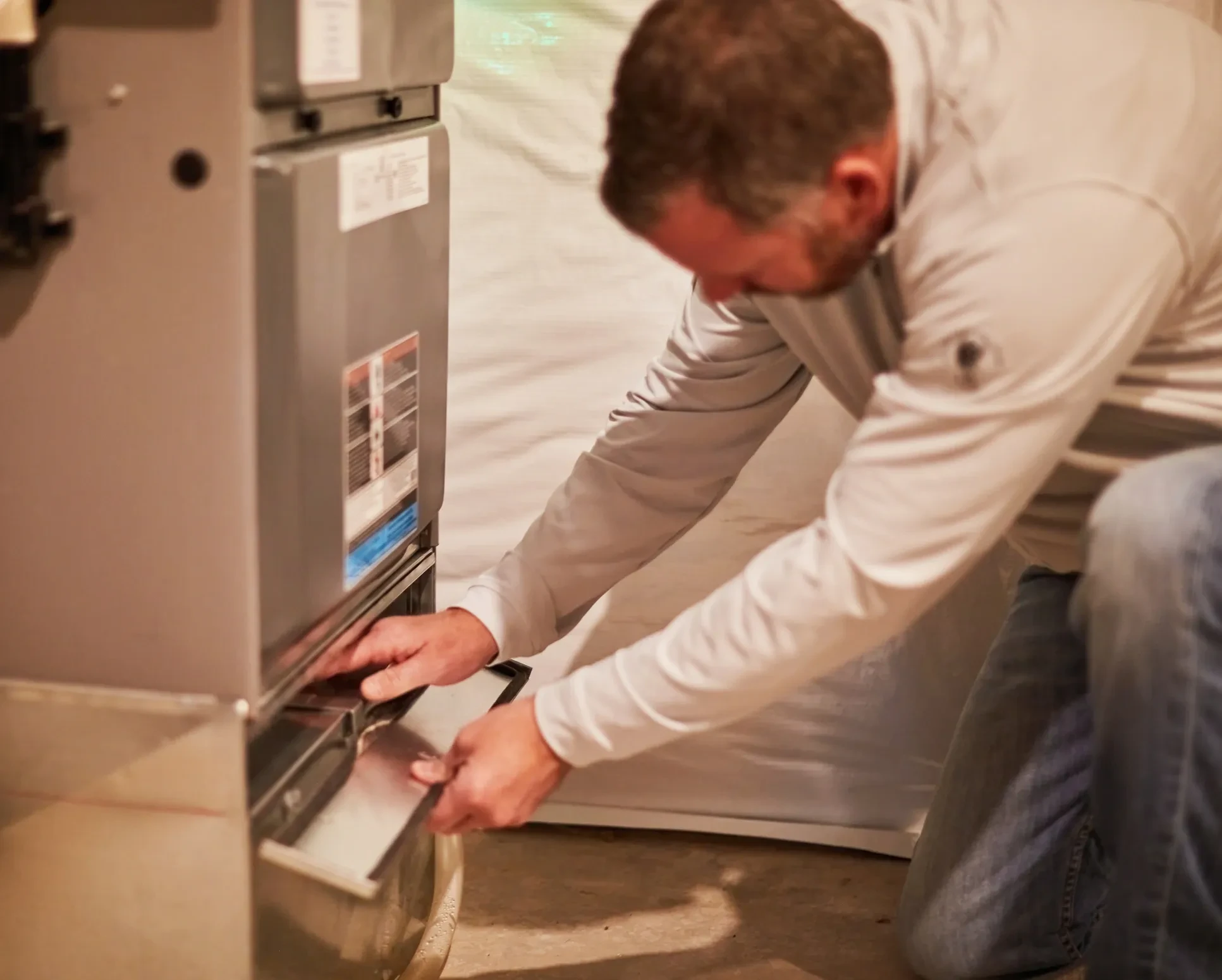

1. AC Is Running But Not Cooling
Most likely causes: Low refrigerant (leak), dirty evaporator or condenser coil, failed compressor, or a refrigerant metering device issue.
What to check first: Make sure the thermostat is set to COOL and the set temperature is below the current room temperature. Check that the outdoor unit is running — if the fan isn't spinning, you may have a failed capacitor or contactor. If the outdoor unit is running but the air from your vents is warm, call a technician. This is not a DIY repair.
2. Ice on the Evaporator Coil or Refrigerant Lines
Most likely causes: Restricted airflow (dirty filter, blocked return vents, dirty coil) or low refrigerant.
What to do: Turn the system off and let it thaw — this can take 2–24 hours. Replace the air filter. Make sure all supply and return vents are open and unobstructed. If the coil freezes again after thawing, call a technician — you likely have a refrigerant issue or a dirty coil that needs professional cleaning.
Never run the AC with a frozen coil. It can damage the compressor.
3. Water Leaking from the Indoor Unit
Most likely causes: Clogged condensate drain line (most common), cracked drain pan, or a frozen coil that's thawing.
What to do: Check the condensate drain line for blockage. A wet/dry shop vac can often clear a clog at the drain outlet. If the pan is cracked or the leak is significant, call a technician. Water damage from a leaking air handler can be expensive — don't ignore it.
4. AC Won't Turn On
Most likely causes: Tripped circuit breaker, blown fuse in the disconnect box, failed capacitor, or a safety switch triggered by a full drain pan.
What to check: Check the circuit breaker panel — reset any tripped breakers. Check the disconnect box near the outdoor unit — it contains fuses that can blow. If the breaker trips again immediately, stop and call a technician. A repeatedly tripping breaker indicates a serious electrical problem.
5. Outdoor Unit Fan Not Spinning
Most likely cause: Failed run capacitor (very common), failed fan motor, or a bad contactor.
What to do: Turn the system off immediately. Running the compressor without the condenser fan will overheat and damage it. Call a technician — capacitor replacement is a quick, inexpensive repair when caught early.
6. AC Short-Cycling (Turns On and Off Frequently)
Most likely causes: Oversized system (most common long-term cause), low refrigerant, dirty filter, or a refrigerant overcharge.
What it means: Short-cycling prevents the system from completing a full cooling cycle, which means it can't remove humidity effectively. Your home may feel cool but clammy. If the system has always short-cycled, it's likely oversized — a problem that can only be fixed by replacing the equipment with a properly sized system.
7. Warm Air from Some Vents, Cool from Others
Most likely causes: Duct leaks, blocked or closed vents, undersized ductwork, or a zoning issue.
What to check: Make sure all supply vents are open and unobstructed. Check for furniture blocking return air vents. If some rooms are consistently warmer than others, you may have duct leaks or a duct design issue — a technician can perform a duct pressure test to identify leaks.
8. Strange Noises
Banging or clanking: Loose or broken component inside the compressor or blower assembly. Turn the system off and call a technician.
Squealing or screeching: Worn blower belt (older systems) or failing motor bearing. Call a technician before the motor fails completely.
Clicking at startup/shutdown: Normal. Clicking that continues during operation may indicate a failing relay or contactor.
Hissing: Refrigerant leak. Turn the system off and call a technician.
Rattling: Loose panel, debris in the outdoor unit, or loose ductwork. Check for debris around the outdoor unit and tighten any loose panels.
9. High Humidity Despite AC Running
Most likely causes: Oversized system (short-cycling prevents adequate dehumidification), low refrigerant, or a system that's simply undersized for the humidity load.
What to do: If the system is properly sized and maintained but humidity is still high, a whole-home dehumidifier can supplement the AC's dehumidification capacity. If the system is oversized, replacement with a properly sized unit — ideally a variable-capacity system — is the long-term solution.
10. High Electric Bills
Most likely causes: Dirty coils, low refrigerant, aging compressor running inefficiently, or a system that's simply old and inefficient.
What to do: Schedule a tune-up — a technician can clean the coils, check refrigerant charge, and identify any components that are causing the system to work harder than it should. If the system is over 12 years old and bills are high, replacement with a higher-efficiency system may pay for itself faster than you'd expect.
When to Call D's Air
D's Air & Heating, Inc. handles AC repairs throughout Chicago and the surrounding suburbs. No contracts required. A $95.35 service call fee applies to all diagnostic visits. Call (773) 940-0965 — we'll diagnose the problem and give you an honest recommendation.