


1. Set Your Thermostat Correctly
The DOE recommends 78°F when you're home and awake, and 85°F when you're away or asleep. Every degree you raise the setpoint saves roughly 3% on cooling costs. A programmable or smart thermostat makes this automatic — you don't have to remember to adjust it.
Avoid setting the thermostat dramatically lower when you get home. The AC doesn't cool faster at a lower setpoint — it just runs longer. Set it to your target temperature and let it work.
2. Use a Smart Thermostat
A smart thermostat learns your schedule and adjusts automatically. It can also respond to utility time-of-use pricing — pre-cooling your home before peak rate hours and letting the temperature drift up slightly during expensive periods. Ecobee and Nest studies show average savings of 10–15% on cooling costs compared to a conventional programmable thermostat.
D's Air installs and programs smart thermostats on every new system installation. Ask about compatible models during your estimate.
3. Replace Your Air Filter Regularly
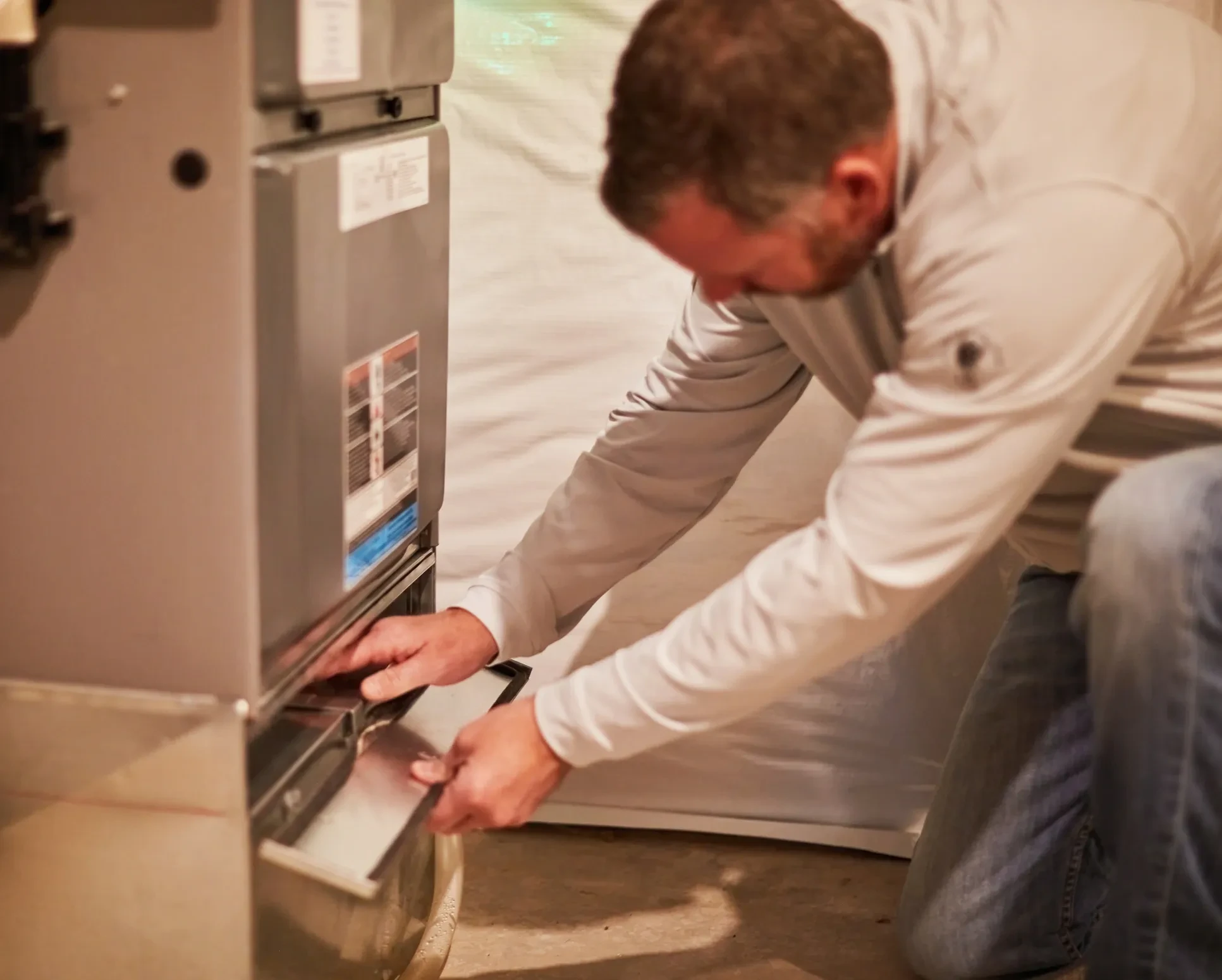
A clogged air filter forces the blower to work harder, reduces airflow across the evaporator coil, and can cause the coil to freeze — all of which increase energy consumption. Replace 1-inch filters every 30–60 days during the cooling season. A clean filter is the cheapest efficiency upgrade available.
4. Keep the Condenser Coil Clean
A dirty outdoor condenser coil can't release heat efficiently, forcing the compressor to work harder and consume more electricity. Rinse the coil with a garden hose (from the inside out) at the start of each cooling season. A professional coil cleaning every 2–3 years provides a more thorough result.
5. Seal Air Leaks
Air leaks in your home's envelope — around windows, doors, electrical outlets, and penetrations — let hot outdoor air in and cool indoor air out. The DOE estimates that air sealing can reduce cooling costs by 10–20% in a typical older home.
Chicago's housing stock includes many older brick bungalows and two-flats with significant air infiltration. Weatherstripping, caulk, and foam sealant are inexpensive and highly effective. Focus on attic bypasses, rim joists, and around window and door frames.
6. Add Attic Insulation
Heat radiates through an under-insulated attic floor into your living space, forcing the AC to work harder. Chicago homes should have R-49 to R-60 of attic insulation. Many older homes have R-11 to R-19. Adding blown-in insulation is one of the highest-ROI home improvements available — it reduces both heating and cooling costs.
D's Air offers blown-in insulation installation. Ask about it during your HVAC estimate.
7. Use Ceiling Fans
Ceiling fans don't cool the air — they create a wind chill effect that makes you feel cooler. Running a ceiling fan allows you to raise the thermostat setpoint by 4°F without any reduction in comfort. Make sure the fan is set to spin counterclockwise in summer (creates a downdraft). Turn fans off when you leave the room — they cool people, not spaces.
8. Block Solar Heat Gain
South- and west-facing windows can add significant heat load on summer afternoons. Closing blinds or curtains on these windows during peak sun hours (typically 2–6 PM) can meaningfully reduce your cooling load. Exterior shading — awnings, trees, or solar screens — is even more effective because it blocks heat before it enters the glass.
9. Reduce Internal Heat Gains
Appliances, lighting, and electronics generate heat that your AC has to remove. Run the dishwasher, oven, and dryer in the evening when outdoor temperatures are lower. Switch to LED lighting — incandescent bulbs convert 90% of their energy to heat. Unplug electronics that draw standby power.
10. Upgrade to a Higher-Efficiency System
If your AC is over 12 years old and rated at 10–13 SEER, upgrading to a 16 SEER2 system can reduce cooling costs by 25–35%. A variable-capacity 20 SEER2 system can reduce costs by 40–50% compared to an old 10 SEER system. The payback period depends on how much you run the AC, but for most Chicago homeowners it's 5–10 years — and you get better comfort in the meantime.
D's Air offers free in-home estimates with a full efficiency analysis. Call (773) 940-0965.