

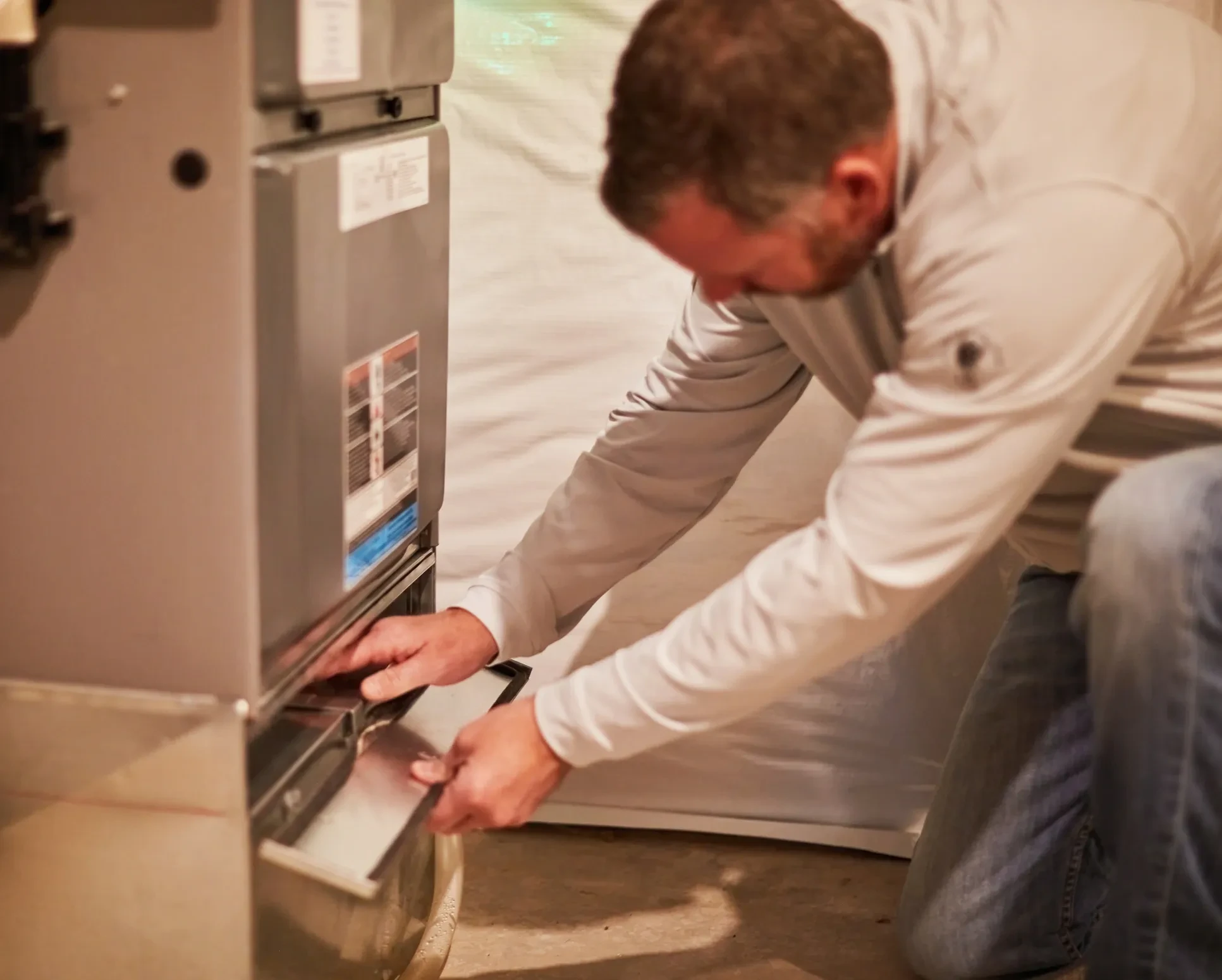

Problem 1 — No Heat at All
Check first: Thermostat set to HEAT and above room temperature? Circuit breaker tripped? Furnace power switch (looks like a light switch, usually on the wall near the furnace) turned off? Gas supply valve open?
Common causes: Tripped limit switch (usually from a dirty filter causing overheating), failed hot surface igniter, faulty flame sensor, failed control board, or a gas supply issue.
What to do: Replace the filter first. If the furnace still won't fire, check for a flashing error code on the control board (usually visible through a small window on the furnace door). Count the flashes — the pattern corresponds to a specific fault code listed on a sticker inside the furnace door. This tells a technician exactly where to look.
Problem 2 — Furnace Short-Cycling
Short-cycling means the furnace fires, runs for a few minutes, shuts off, then fires again shortly after — never completing a full heating cycle.
Most common cause: Overheating. The limit switch shuts the furnace off when it gets too hot. The most common reason for overheating is a dirty air filter restricting airflow. Replace the filter first.
Other causes: Blocked return air vents, a failing blower motor, an oversized furnace (too large for the home), or a faulty limit switch that trips prematurely.
What to do: Replace the filter and check that all supply and return vents are open and unobstructed. If short-cycling continues, call a technician.
Problem 3 — Furnace Runs but No Warm Air
The blower runs but the air coming out of the vents is cool or only slightly warm.
Common causes: The burners aren't firing (igniter or flame sensor issue), the gas valve isn't opening, or the blower is running in fan-only mode (check thermostat — fan set to ON instead of AUTO).
What to do: Set the thermostat fan to AUTO. If the problem persists, check for error codes on the control board. A technician will likely find a failed igniter or dirty flame sensor.
Problem 4 — Dirty Flame Sensor
The flame sensor is a thin metal rod that sits in the burner flame. Over time, it develops a coating of oxidation that prevents it from detecting the flame. The furnace fires, the flame sensor doesn't confirm ignition, the gas valve closes, and the furnace tries again. After a few failed attempts, it locks out.
Symptoms: Furnace fires briefly (you may hear it ignite), then shuts off. Repeats 2–3 times, then stops trying.
Fix: A technician cleans the flame sensor with fine steel wool or emery cloth — a 10-minute job. It's one of the most common furnace service calls and one of the least expensive repairs.
Problem 5 — Failed Hot Surface Igniter
The igniter is a fragile ceramic element that heats to ~1,800°F to light the gas. It's the most commonly replaced furnace component. Igniters typically last 4–7 years.
Symptoms: Furnace tries to start (you hear the inducer motor), but no ignition. No flame, no heat.
Fix: Igniter replacement. Parts cost $20 to $50; total repair typically $150 to $250 with labor. A straightforward repair on a furnace that's otherwise in good condition.
Problem 6 — Pressure Switch Fault
The pressure switch monitors the inducer motor to confirm it's creating the right draft before allowing gas flow. If the switch doesn't close, the furnace won't fire.
Common causes: Blocked flue or intake pipe, failed inducer motor, cracked pressure switch hose, or a faulty switch.
What to check: Inspect the PVC vent pipes (high-efficiency) or metal flue (80%) for blockages, disconnections, or ice buildup at the exterior termination. A bird's nest or ice can block the intake and trigger a pressure switch fault.
Problem 7 — Condensate Drain Clog (High-Efficiency Furnaces)
High-efficiency furnaces produce condensate (water) as a byproduct of combustion. This drains through a PVC line. If the line clogs with algae, debris, or freezes, the furnace shuts down on a safety switch.
Symptoms: Water pooling near the furnace, furnace shutting off intermittently, error code indicating a condensate issue.
Fix: Clear the drain line. Pour a cup of diluted bleach (1:10 ratio) down the drain annually to prevent algae buildup. If the line is frozen (can happen in very cold weather if it exits through an unheated space), insulate the drain line.
Problem 8 — Unusual Noises
- Banging at startup: Delayed ignition — gas builds up before igniting, causing a small explosion. Can indicate dirty burners or a gas pressure issue. Have it checked.
- Squealing: Worn blower motor bearings or a slipping belt (older furnaces). Needs service before the motor fails.
- Rattling: Loose panels, screws, or ductwork. Usually harmless but worth tightening.
- Rumbling after shutdown: Normal — the heat exchanger cooling down. Not a problem.
- Clicking that doesn't stop: The igniter trying repeatedly without lighting. Indicates an ignition or gas supply problem.
When to Call Immediately
- CO detector alarm — leave the house, call 911, then call your HVAC contractor
- Smell of gas — leave the house, don't use any switches or phones inside, call the gas company from outside
- Yellow or orange burner flame (should be blue)
- Soot or black marks around the furnace
- No heat with outdoor temperatures below 20°F
D's Air & Heating serves Chicago and surrounding suburbs. Call (773) 940-0965 for service.